
Join cutting-edge research on light and mental health.
Professor Sean Cain from Flinders University has found that people respond differently to light, which affects their body clock and mood. He also discovered that antidepressants change how the body responds to light.
Flinders University is now expanding this research through the Illuminate Study. The study investigates whether antidepressants' effects on light sensitivity play a role in how effectively they alleviate depression symptoms. The goal is to identify which patients will benefit most from which treatments, to improve treatment outcomes.
We're seeking people 18-35, who are experiencing low mood, not currently taking any medication, and are interested in starting antidepressant treatment as part of a research program.
Benefits include $2000 total compensation & a personalised report to understand your sleep and light patterns.
If you're struggling with low mood or depression and want to contribute to research that could help millions find more effective treatments, we'd love to hear from you.
What’s involved?
-
Online and over the phone screening (1 hour) and in-person clinical interview at Flinders University to assess eligibility (3 hours).
-
Home monitoring of your sleep, activity and light patterns using research-grade wearable tech devices.
-
Stay for three nights at our Flinders University Sleep Laboratory (Bedford Park) and complete brain scans (fMRI), biological samples, and tests of cognition.
-
Undergo treatment with an antidepressant medication for 8 weeks, and collect data on your sleep, activity and light patterns at home.
-
Stay for three nights at our Flinders University Sleep Laboratory (Bedford Park) and complete brain scans (fMRI), biological samples, and tests of cognition.
-
Using data collected during the home data collection we provide you with a report to help you understand your own sleep and light patterns.
New insights into your sensitivity to light and your light and sleep patterns
Our research has shown light sensitivity and light exposure are important for your mental health. To help you gain understanding of your own light and sleep patterns we provide you with a report of your individualised sensitivity to light, and your light and sleep data. Using this information we can provide personalised light and sleep recommendations for you to improve your wellbeing.
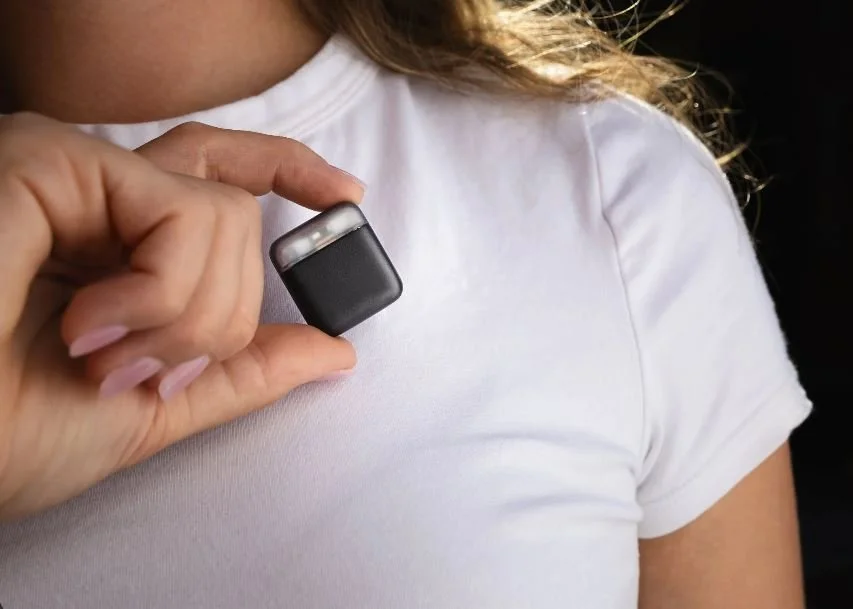
Understand Your Light Patterns
“Am I getting enough light during the daytime?”
“Am I optimising my evening light to help my sleep?”
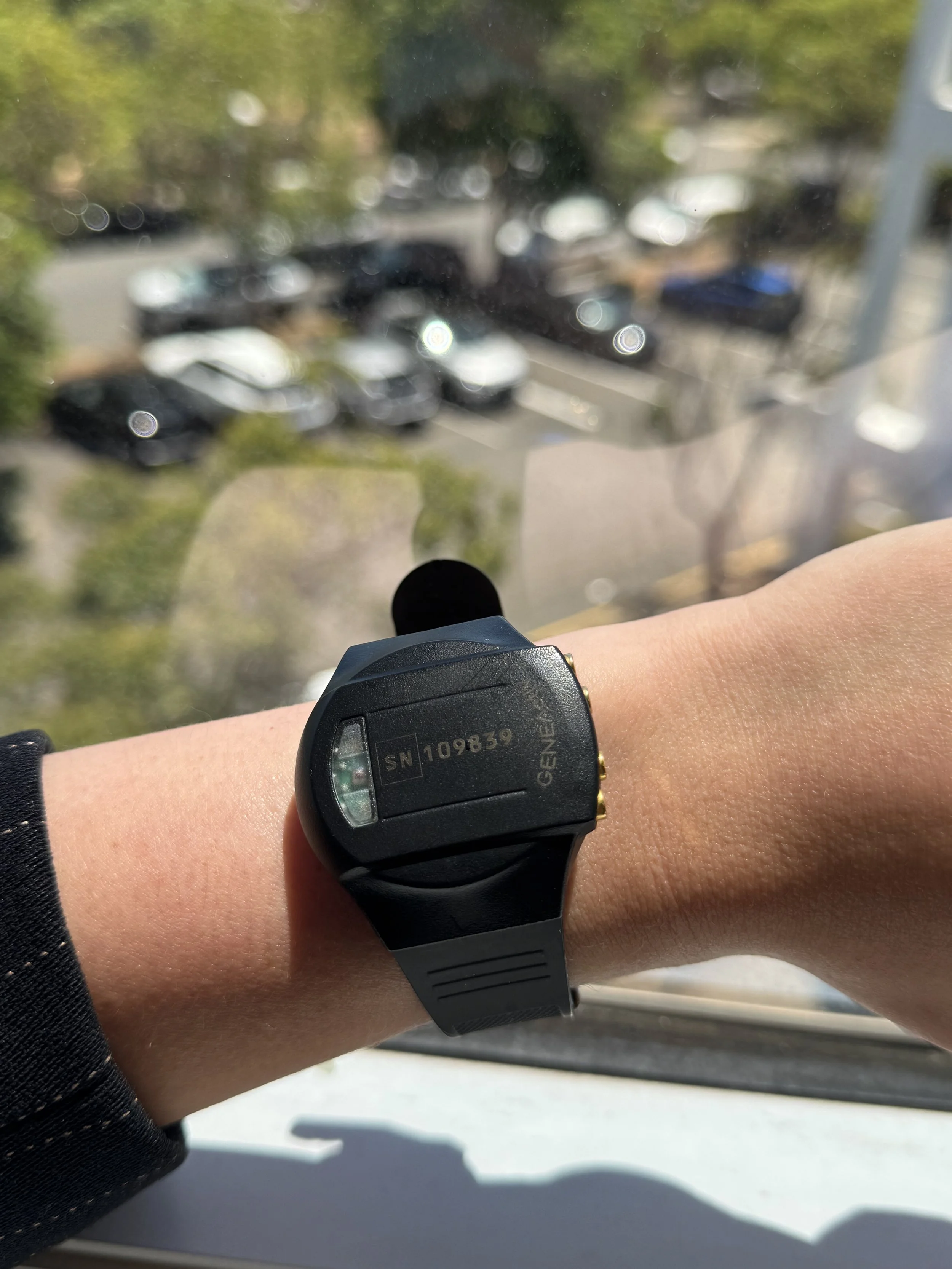
Get Insights On Your Sleep Patterns
“Am I giving myself enough time for adequate sleep?”
“On what days am I getting worse sleep?”
Read about our research
Brighter days and better sleep
Published in the Journal of Affective Disorders
More outdoor light in the day is beneficial for sleep and mood. We examined self-reported outdoor light exposure in over 400,000 people and found that more hours spent outdoors during the day was associated with greater ease of getting up, less frequent tiredness, fewer insomnia symptoms, and earlier timing preference. In addition, more outdoor light was associated with lower odds of lifetime major depressive disorder, antidepressant usage, and low mood.
Light and mental health
Published in Nature Mental Health
In the largest study of objective light data ever, we found that light patterns relate to a broad range of psychiatric outcomes. Brighter light in the day was associated with reduced disease risk, but brighter light at night was associated with increased risk. Avoiding light at night and seeking light during the day may be a simple and effective, non-pharmacological means of broadly improving mental health.
This study got the cover of Nature Mental Health and was broadly covered in the media in over 140 news articles including on Huberman Lab (watch below).
Sensitivity to light is altered during a depressive episode
Published in the Journal of Affective Disorders
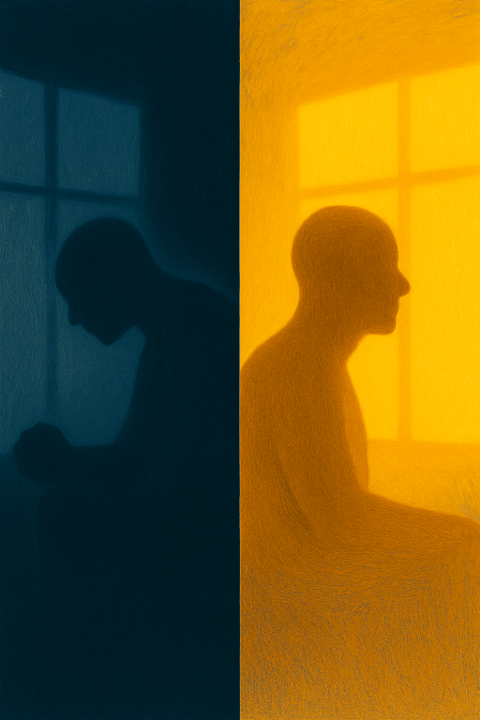
In this study of people experiencing depression, we found that the body's internal clock became less sensitive to light during a depressive episode. This was measured by reduced melatonin suppression in response to light compared to healthy controls and those who had recovered from depression.